Fractionated coconut oil is a fraction of the whole oil, in which the long-chain fatty acids are removed so that only medium chain saturated fatty acids remain. Lauric acid, a 12 carbon chain fatty acid, is often removed as well because of its high value for industrial and medical purposes. Fractionated coconut oil may also be referred to as medium chain triglyceride (MCT) oil because it is primarily the medium chain caprylic (8 carbons) and capric (10 carbons) acids that make up the bulk of the oil.
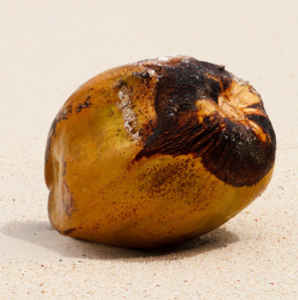
Coconut oil itself is extracted from the meat of the coconut fruit. Even before processing, it is very high in saturated fat, with a saturated fat content which hovers around 90%. In pure form, coconut oil is solid at room temperature, with a milky color. When refined or fractionated, the coconut oil becomes clear to yellow in color, and it is liquid at room temperature. The refining process removes impurities which could cause the oil to become rancid over time.
The big advantage to fractionated coconut oil over regular coconut oil is that it is very shelf-stable. It will not become rancid, unlike unrefined oils, making it easier to work with. Fractionated coconut oil is also capable of handling very high heat, which can be a distinct bonus, and it can be easier to work with than solid coconut oil. Thanks to the fact that it has a long shelf life, it does not require special storage and handling procedures, beyond keeping it in a cool dry place.
One common use of fractionated coconut oil is as a carrier oil for essential oils and massage. The oil is light and non-greasy, but it penetrates the skin very well, making it highly suitable for the delivery of essential oils. It can also be used as an intensive moisturizer, especially on places like the face, where the skin is known for being delicate. Fractionated coconut oil also makes a good base for body scrubs and other body care products.
Soap makers also like to work with fractionated coconut oil, favoring it for its light, even bubbles and neutral odor. It can also be whipped and blended into moisturizing creams for use as an intensive moisturizer.
Weight: 8lbs /Gal